Rethinking LeadershipKevin Morrell · companion site

Lens 5 of 6 · Chapter Five

Method

Studying narrative requires methods that can see structure

In plain terms

A set of analytical stances rather than a toolkit: close reading, emplotment analysis, structural analysis after Propp, discourse analysis, and Foucauldian archaeology. Each attends to something that methods treating language as a container for pre-formed meaning cannot reach.

Why it matters

If leadership is constituted through narrative, then extracting themes from transcripts studies the wrong object. Thematic coding produces findings that are generalisable in form and thin in substance. The book's methodological claim is not a preference: it follows from the constitutive claim, and it has consequences for what can be known.

How the book develops it

Close reading asks not what a text means but how it achieves its effects — which is where the persuasive force of an aphorism or a policy sentence actually lives. Reconstructing an enthymeme's suppressed premises reveals the architecture of persuasion and, with it, the audiences for whom the argument was never going to be intelligible.

Emplotment analysis treats selection, sequence and connection as the data rather than as noise around it. Operationalised through structural features — scene-setting, beginnings and endings, the introduction of drama, the attribution of agency — and worked at two levels simultaneously, across cases for templates and within cases for departures, it found something thematic coding could not: people emplotting events that had not yet happened.

Structural analysis after Propp asks not who plays the hero but how the hero function is distributed, and how the public tale relates to the private one. Read for content, an induction story about treating negotiation as chess yields a finding about professional socialisation. Read structurally, it is a protective fiction, offered at the threshold of a career, doing the work of making bearable something that is not a game at all.

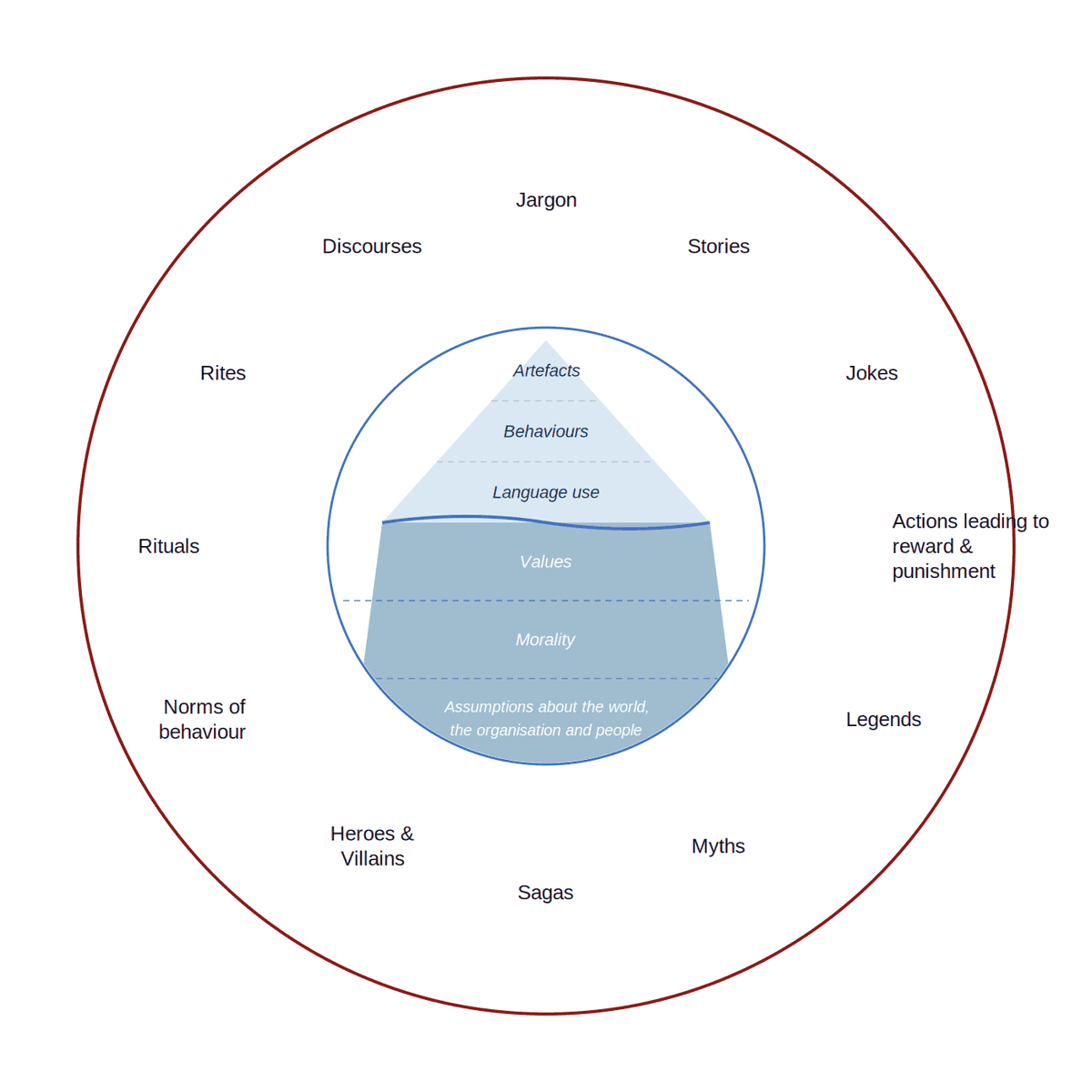
Discourse analysis at scale is what the cultural audit does. Attitudinal survey work establishes distribution; the storytelling halo — rituals, legends, sagas, heroes and villains, jargon, jokes, taboos — reaches the mechanisms through which positions circulate. Across forty interviews in one large institution it surfaced four connected discourses and a piece of local shorthand, mouth music, for enthusiastic verbal commitment unaccompanied by action. An organisation that has coined a term for something does it often enough to need one.

Archaeology asks a prior question: under what conditions did this kind of knowledge claim become sayable and authoritative at all? And silenced stories are treated as a structural matter, not an oversight: people occupying structurally impossible roles often have no vocabulary for impossibility, so they narrate it as personal inadequacy or bad luck.

The chapter is candid about limits. Strong theoretical apparatus finds what it is primed to find; narrative effects are hard to trace across time; and close attention to what people actually say produces material whose use can cost them. Sometimes the most analytically compelling passage has to be left out.

Related concepts

Terms you will meet in this chapter, kept in the author's vocabulary:

  • Close reading
  • Emplotment analysis
  • Strong plots
  • Storytelling halo
  • Cultural audit
  • Discourse
  • Archaeology
  • Silenced stories
  • Public tale and private tale
  • Event and representation
  • Positionality

One short example

A question to sit with

What does your organisation's most repeated success story leave out — and what would you have to do to find out?

Where to go next

This lens is developed in Chapter Five: Method.

Related tools: Narrative Landscape Mapper · Enthymeme Analyser

Related cases: Tax and folk tales · Measuring which stories circulate · Evidence-based management

Status: paraphrased from the manuscript · author review required · no manuscript text reproduced